
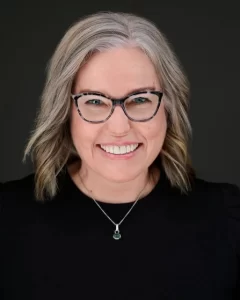
 Michelle Labine PhD
A Late Diagnosed AuDHD Woman
Hello and welcome.
I’m Michelle, a psychotherapist, writer, and late-diagnosed AuDHD woman. I created this space for women like me: those who spent years meeting the expectations of others teachers, parents, partners, workplaces, the culture and contorting themselves into what was seen as acceptable, likable, employable. Only to discover, often much later, that the version they were searching for was there all along.
AuDHD describes people who are both Autistic and ADHD. This dual neurotype often shows up as a shifting blend of deep sensitivity and sensory overload, intense focus and constant distraction, emotional insight and social exhaustion. It’s complex, and it rarely looks how others expect it to.
Many of us are hyper-aware of others’ emotions but unsure how to express our own. Capable in some areas, totally overwhelmed in others. Forgetful of appointments, yet able to recall the smallest emotional details. We love deeply, think constantly, and struggle quietly, often without understanding why.
Because so much of this happens beneath the surface, it’s often misread, dismissed, or pathologized. Especially in women, girls, and AFAB folks, AuDHD traits are overlooked because they don’t match the stereotypes. Autism isn’t always monotone voices or rigid routines. ADHD isn’t just loud, impulsive boys. So, when we present as bright, empathic, perfectionistic, or high-achieving, we’re praised, not recognized.
We’re called “gifted,” “too emotional,” “mature for our age.” We become helpers, over-functioners, peacekeepers intuitive to others’ feelings but disconnected from our own. We learn early to adapt from subtle cues like a raised eyebrow, a pause, a laugh that stings. We learn to tone ourselves down, to smooth edges, to disappear parts of ourselves.
We adapt. We watch. Mirror. We mask.
We get so good at performing that no one sees the effort. Sometimes, even we forget where the mask ends and we begin.
We do this to stay safe and avoid judgment or rejection. Being “different” hasn’t felt safe emotionally, socially, or physically, and belonging often comes with conditions. Being “good” often means being quiet, compliant, invisible.
We learn that fitting in means hiding. But it doesn’t have to stay that way.
Our struggles often get mislabeled as anxiety, depression, burnout, eating disorders, chronic fatigue, or borderline personality disorder. Our sensory needs are seen as dramatic. Our withdrawal as rude. Our emotional intensity as instability. And when we finally fall apart, we’re told we’re overreacting or not trying hard enough.
But we have been trying. Harder than anyone knows.
And the cost of being understood, if it means performing someone else’s version of “okay”, is too high.
For years, I did what many of us do. I perfected, people-pleased, and shape-shifted to fit a world that overwhelmed me. I presented as capable, calm, put-together. Inside, I was always managing the one misstep from being too much or not enough.
When we don’t see ourselves reflected in the stories, the classrooms, the relationships we start to believe the problem is us. We call it failure. We call it too sensitive. Too intense. Too messy. Too disorganized. We internalize the disconnect and call it truth.
That blame becomes shame. Shame becomes self-loathing. It whispers, You don’t belong anywhere.
And it takes root in the body as disordered eating, perfectionism, people-pleasing, self-harm, suicidal thoughts we never speak aloud. We learn to cope in silence. And still, so often, no one sees it for what it is.
Because we’re still smiling. Still showing up. Still excelling or care-taking so well that no one thinks to ask if we’re okay. But inside, we’re exhausted. Lonely. Grieving the self we never had permission to be.
For most of my life, I felt like an outsider. I fit in everywhere and belonged nowhere. Socializing left me drained. Friendships felt lopsided.
When I was finally diagnosed, it was a profound relief. There was a name for my experience! And, alongside the relief came grief. Grief for the years I spent trying to be someone else. For the energy I poured into hiding. For the parts of me I abandoned to get by.
And I know I’m not alone.
Too many Autistic women are overlooked, misdiagnosed, or dismissed. The cost is real — to our mental health, our relationships, our sense of self. We’re told to be small, to blend in, to keep the peace even if it means losing ourselves. But, belonging that requires erasure isn’t belonging at all.
This blog is a space for unmasking and remembering. A late diagnosis is a beginning.
For me, that’s looked like learning to offer myself compassion and to advocate for what I need without apology. To trust my intuition, honour my voice, my sensory brilliance, and my deep capacity for connection.
That’s what I hope this space will offer you, too; insight, validation, and a soft place to land.
Whether you’re newly diagnosed or years into your journey…
Quietly questioning or boldly reclaiming…
Whispering your truth or shouting it into the stars…
You are unfolding. You belong here.
This is a space for collective becoming.
A space to honour what it took to get by while celebrating who you’ve always been.
You are not alone. You never were.
And now, maybe, you finally see why.